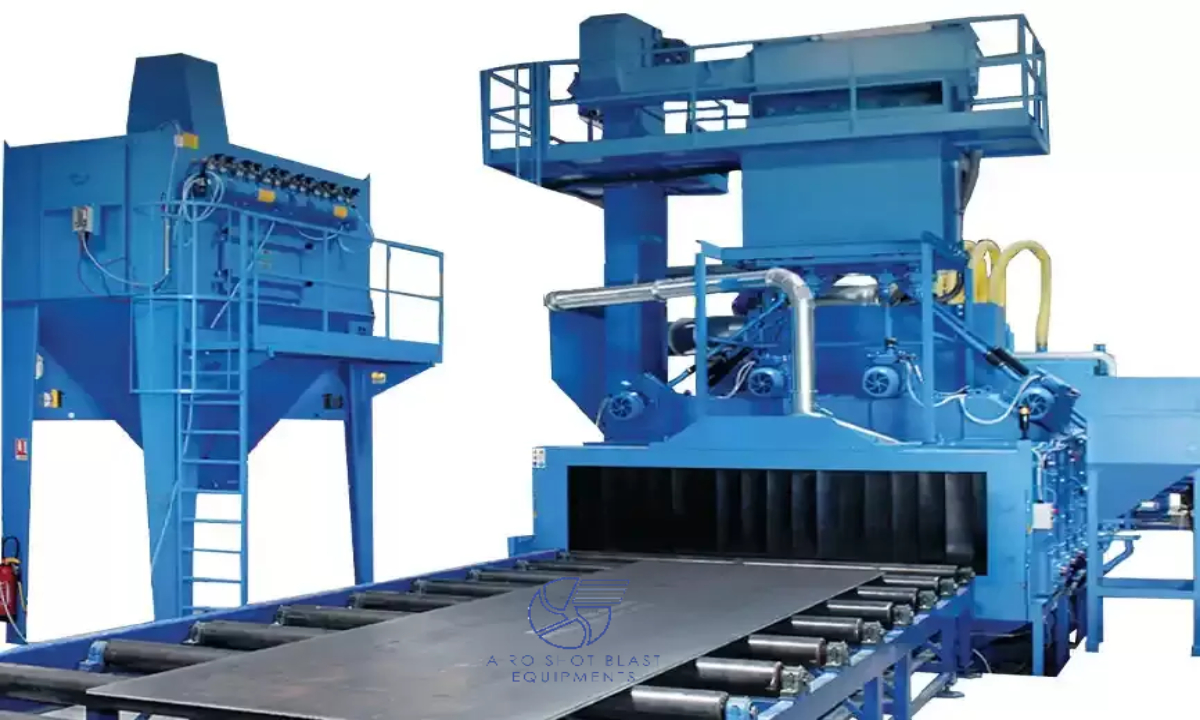
SHOT BLASTING MACHINE

Advanced surface preparation technology for industrial applications. Delivering precision cleaning, finishing, and strengthening solutions across manufacturing sectors worldwide.

Get Expert Consultation WhatsApp
Shot Blasting Machine
Blast Wheel
Abrasive System
Dust Collector

What is a Shot Blasting Machine?

A shot blasting machine is a specialized industrial equipment designed for surface preparation, cleaning, and finishing of metals and other materials. Using high-velocity abrasive media propelled by centrifugal force or compressed air, these machines efficiently remove rust, scale, paint, and contaminants while simultaneously improving surface texture and preparing substrates for coating applications.

Shot blasting technology operates on the principle of impacting steel shot or grit at high speeds against workpiece surfaces. This controlled bombardment creates a clean, uniform surface profile essential for optimal adhesion in painting, coating, and bonding processes. Unlike chemical cleaning methods, shot blasting is environmentally friendly, cost-effective, and delivers consistent results across diverse materials including steel, aluminum, concrete, and composites.

99% Contaminant Removal
50+ Industry Applications
70% Cost Reduction vs Manual
24/7 Continuous Operation

Types of Shot Blasting Machines

Shot blasting machines are categorized based on their operational mechanism, application scope, and automation level. Understanding these variations helps manufacturers select the optimal equipment for specific production requirements and material handling needs.

01

Portable Shot Blasting Machines

Ideal for on-site surface preparation, portable shot blasting machines are designed for flexibility and mobility across industrial environments. These machines use a high-pressure abrasive stream to clean, descale, and prepare surfaces such as steel structures, pipelines, and concrete floors.

02

Table Blast Machines

Featuring a rotating table platform, these machines handle larger, heavier components up to 10 tons. The table rotates within the blast chamber while multiple blast wheels deliver comprehensive coverage. Commonly used for structural steel, heavy castings, and complex assemblies requiring thorough surface preparation.

03

Hanger Type Machines

Designed for irregularly shaped or delicate components, hanger-type systems suspend parts from overhead conveyors or hooks. The controlled rotation and positioning allow precise blasting of complex geometries. Applications include automotive parts, aerospace components, and precision-machined items.

04

Pipe Cleaning Machines

Designed for efficient internal and external surface preparation, pipe cleaning shot blasting machines use controlled abrasive blasting to remove rust, scale, and contaminants from pipes of various diameters. Specialized rotating mechanisms and adjustable blast nozzles ensure uniform coverage along the pipe length.

05

Plate Cleaning Machines

Engineered for efficient surface treatment of metal plates and sheets, plate cleaning shot blasting machines utilize roller conveyor systems to move workpieces through a controlled blast chamber. Multiple blast wheels ensure uniform removal of rust, scale, and contaminants across wide surfaces.

06

Roller Conveyor Systems

Engineered for long, cylindrical, or structural components, roller conveyor machines transport parts through the blast chamber on motorized rollers. Blast wheels positioned above and below ensure 360-degree coverage. Ideal for pipes, beams, rails, and similar elongated workpieces.


View More All Machines

How Shot Blasting Works

The shot blasting process involves a precisely engineered sequence of operations that transform contaminated or unprepared surfaces into clean, textured substrates ready for subsequent processing. Understanding this mechanism is crucial for optimizing machine parameters and achieving desired surface characteristics.

1

Loading

Components are positioned within the blast chamber manually or via automated handling systems

2

Propulsion

Blast wheels accelerate abrasive media to velocities exceeding 80 m/s using centrifugal force

3

Impact

High-velocity media strikes surfaces, removing contaminants and creating uniform surface profile

4

Collection

Spent media and debris fall into collection hoppers for separation and recycling

5

Filtration

Advanced dust collection systems capture fine particles, maintaining clean working environment

6

Unloading

Finished components are extracted, revealing clean, textured surfaces ready for coating

The blast wheel is the heart of the system, comprising a rotating cage with radial blades that accelerate abrasive particles. Adjustable parameters include wheel speed (typically 1500-3000 RPM), blast angle, media flow rate, and exposure time. These variables are optimized based on material type, contamination level, and desired surface roughness (typically Ra 25-150 micrometers).

Read More Explore the Full Guide

Industrial Applications

Shot blasting technology serves critical functions across diverse manufacturing sectors, from automotive and aerospace to construction and shipbuilding. Its versatility makes it indispensable for surface preparation, cleaning, strengthening, and finishing operations.

Automotive Manufacturing

Pre-coating preparation of body panels, chassis components, and engine parts. Shot peening of springs, gears, and transmission components for fatigue resistance. Cleaning of castings and forgings before machining operations.

Aerospace Industry

Surface preparation of aluminum and titanium alloys for bonding and coating. Shot peening of critical components like landing gear, turbine blades, and structural members to enhance fatigue life. Removal of oxidation and thermal scale from heat-treated parts.

Steel Fabrication

Descaling of hot-rolled steel before welding or painting. Removal of mill scale, rust, and welding slag from structural steel. Surface profiling to achieve optimal coating adhesion on bridges, buildings, and industrial structures.

Foundry Operations

Cleaning of sand castings to remove adhered mold material and core sand. Surface finishing of investment castings for improved appearance. Deflashing and deburring of die-cast aluminum and zinc components.

Rail & Transportation

Maintenance cleaning of railway components including wheels, axles, and couplers. Preparation of rolling stock frames and bogies for protective coating. Restoration of corroded or weathered metal surfaces on transit infrastructure.

Construction Equipment

Heavy-duty cleaning of excavator components, bulldozer tracks, and hydraulic cylinders. Removal of corrosion from equipment exposed to harsh environmental conditions. Surface preparation for remanufacturing and refurbishment programs.

Oil & Gas Sector

Cleaning of pipelines, valves, and pressure vessels before inspection or coating. Removal of scale and corrosion products from drilling equipment. Surface preparation of offshore platform components for corrosion protection systems.

Shipbuilding

Hull plate preparation achieving SA 2.5 or SA 3 cleanliness standards. Removal of marine growth and corrosion during ship maintenance and dry-docking. Surface profiling for maximum adhesion of protective coating systems in marine environments.

Key Benefits & Advantages

Shot blasting technology offers substantial operational, economic, and environmental advantages over alternative surface preparation methods. These benefits contribute directly to improved product quality, reduced processing costs, and enhanced workplace safety.

Buying Guide: Selecting the Right Shot Blasting Machine

Choosing the appropriate shot blasting equipment requires careful evaluation of production requirements, component characteristics, quality standards, and budget constraints. This comprehensive guide outlines critical selection criteria.

Component Size & Weight

Evaluate maximum dimensions and weight of parts to be processed. Consider future production expansion. Tumble blasters suit parts under 500kg; table machines handle up to 20 tons. Ensure chamber dimensions accommodate longest components with adequate clearance.

Production Volume

Calculate daily throughput requirements. Batch systems process 50-500 parts/hour; continuous systems exceed 1000 parts/hour. Higher volumes justify automation investment and continuous conveyor configurations. Consider peak demand scenarios and seasonal fluctuations.

Material Type

Different materials require specific abrasive media and blast parameters. Soft materials like aluminum need gentler treatment; hardened steel tolerates aggressive blasting. Verify machine compatibility with your material specifications and hardness range.

Surface Finish Requirements

Define target surface roughness (Ra), cleanliness standard (SA 2.5, SA 3), and coating adhesion specifications. High-precision applications demand variable speed controls and multiple blast wheels. Critical aerospace components require documented process validation.

Abrasive Media Selection

Choose between steel shot (S70-S780), steel grit (G12-G80), aluminum oxide, or specialized media. Media selection affects surface profile, equipment wear, and operating costs. Ensure machine design accommodates your preferred abrasive type.

Automation Level

Options range from manual loading to fully automated systems with robotic handling. Higher automation increases capital cost but reduces labor expenses and improves consistency. Evaluate ROI based on labor rates and production volume.

Dust Collection System

Effective filtration is mandatory for environmental compliance and worker safety. Cartridge filters suit most applications; baghouse systems handle high-volume operations. Verify air displacement capacity matches blast wheel configuration (typically 10,000-50,000 CFM).

Energy Efficiency

Modern machines feature variable frequency drives, energy-efficient motors, and optimized blast patterns. Calculate power consumption (typically 20-200kW) and operating costs. Energy-efficient designs reduce electricity expenses by 20-30%.

Maintenance Requirements

Assess accessibility of wear components including blast wheels, liners, and belts. Modular designs simplify maintenance; predictive monitoring reduces downtime. Budget for replacement parts: manganese liners (500-2000 hours), blast wheels (1000-4000 hours).

Safety Features

Essential features include interlocked access doors, emergency stop systems, acoustic insulation, and explosion-proof electrical components. Verify compliance with OSHA standards and CE certification for international markets.

Vendor Support

Evaluate manufacturer reputation, spare parts availability, technical support responsiveness, and training programs. Local service centers minimize downtime. Request customer references and site visits to operating installations.

Total Cost of Ownership

Beyond purchase price, calculate installation costs, media consumption, energy expenses, maintenance, and labor. Quality machines have higher initial cost but lower lifetime expenses. Expected ROI typically 2-5 years depending on utilization.

Frequently Asked Questions

What is the difference between shot blasting and sandblasting?
Shot blasting uses metallic media (steel shot or grit) propelled by centrifugal force from a blast wheel, while sandblasting uses compressed air to propel various abrasive materials including sand. Shot blasting is more efficient for production environments, offers better media recycling, and produces more consistent results. Sandblasting provides better access to complex geometries and is portable for field applications.
How long does abrasive media last before replacement?
Steel shot typically lasts 2000-3000 cycles before size degradation requires replenishment. Grit media has shorter life (500-1000 cycles) due to fracturing. Modern machines feature magnetic separation and screening systems that remove broken media while recycling usable particles. Media consumption varies with material hardness and contamination level.
What maintenance schedule should I follow?
Daily: inspect dust collector, check media level, clean separator screen. Weekly: lubricate bearings, inspect belts and wear parts, verify blast wheel alignment. Monthly: replace worn liners, check electrical connections, calibrate controls. Annually: comprehensive inspection, blast wheel rebuild, media replacement, filter cartridge renewal. Preventive maintenance extends equipment life and prevents costly failures.
Can shot blasting damage my components?
Properly configured systems will not damage components. Parameters including blast wheel speed, media size, exposure time, and angle are adjusted for material type and thickness. Delicate parts require reduced velocity and finer media. Shot peening intentionally induces controlled surface compression for strengthening. Operator training and process validation ensure safe processing.
What is the typical ROI for shot blasting equipment?
ROI varies with production volume and labor costs. High-volume manufacturers typically achieve payback within 18-36 months through reduced labor, improved throughput, and lower coating failures. Small job shops may require 3-5 years. Factors include automation level, previous cleaning method costs, and quality improvement benefits. Energy efficiency and media recycling significantly impact operating expenses.
How much space do I need for installation?
Space requirements depend on machine configuration. Tumble blasters need 100-300 sq ft; continuous systems require 500-2000 sq ft. Include clearance for loading/unloading (minimum 6 ft each side), maintenance access, dust collector, and material handling equipment. Floor loading capacity must support machine weight plus components (typically 5000-50,000 lbs). Ceiling height should accommodate dust collection ductwork.
Are shot blasting machines environmentally compliant?
Modern shot blasting systems are environmentally friendly when properly maintained. Enclosed chambers prevent dust emissions; high-efficiency filters capture 99.9% of particulates. Media recycling eliminates waste disposal concerns. Systems meet EPA, OSHA, and international environmental standards. Unlike chemical cleaning, shot blasting generates no hazardous waste or toxic fumes, making it a sustainable surface preparation solution.

Get Expert Consultation

Our shot blasting specialists provide comprehensive technical support for equipment selection, installation planning, process optimization, and troubleshooting. Contact us to discuss your specific surface preparation requirements and receive customized recommendations.

Technical Sales

Email: info@airoshotblast.in

Phone: +91-9119207701

Equipment selection, pricing, and specifications

Headquarter

Address: P. No. 324-25, 378-79-80, Khasra No. 9/4, Shree Yade Gaun, Near Banar Ring Road, Jodhpur, Rajasthan, India, Pin Code- 342027

Service & Support

Email: info@airoshotblast.in

WhatsApp: +91-9119207701

Maintenance, parts, and technical assistance

Request Free Consultation